




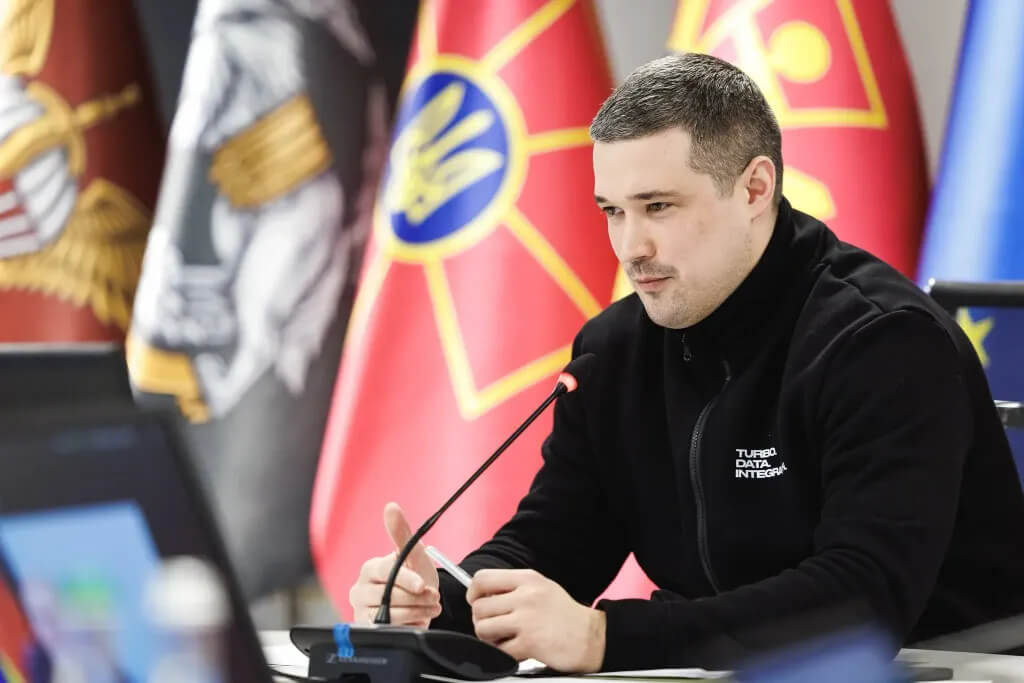
Two days ago, Mykhailo Fedorov, Ukraine’s newly appointed Minister of Defence, held his first talks with his German counterpart Boris Pistorius on the needs of the Ukrainian army and Germany’s support. This was announced by the Ukrainian Ministry of Defence on its website.
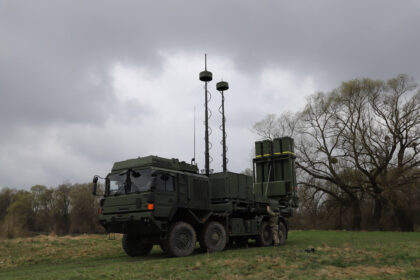
While the topic of air defence remains a top priority in light of the ongoing Russian attacks on Ukraine’s energy infrastructure, and discussions focused on topics such as expanding IRIS-T deliveries and long-term supplies of missiles for Ukraine’s MIM-104 Patriot fire units, another topic was also in the spotlight: artillery.
The former Minister of Digital Transformation, who is particularly known for his influence in the development of Ukrainian drone technology and similar projects, surprised me by emphasising the importance of artillery shells with extended ranges and stressing how important a continuous supply of these shells would be.
In particular, artillery ammunition with significantly extended range has hardly found its way to Ukraine so far and, if used correctly, could make a noticeable difference, at least locally.
According to Fedorov, ammunition of this type is intended to ensure the effective employment of artillery in a so-called “drone-dominated kill zone”.
To put it simply, these are zones along the front line where loitering munitions pose an enormous threat to soldiers, their equipment and vehicles, and where an attack can be expected at virtually any moment.
The advantages of artillery ammunition with (significantly) extended range
The use of artillery ammunition with a (significantly) extended range would offer a number of advantages in these zones.
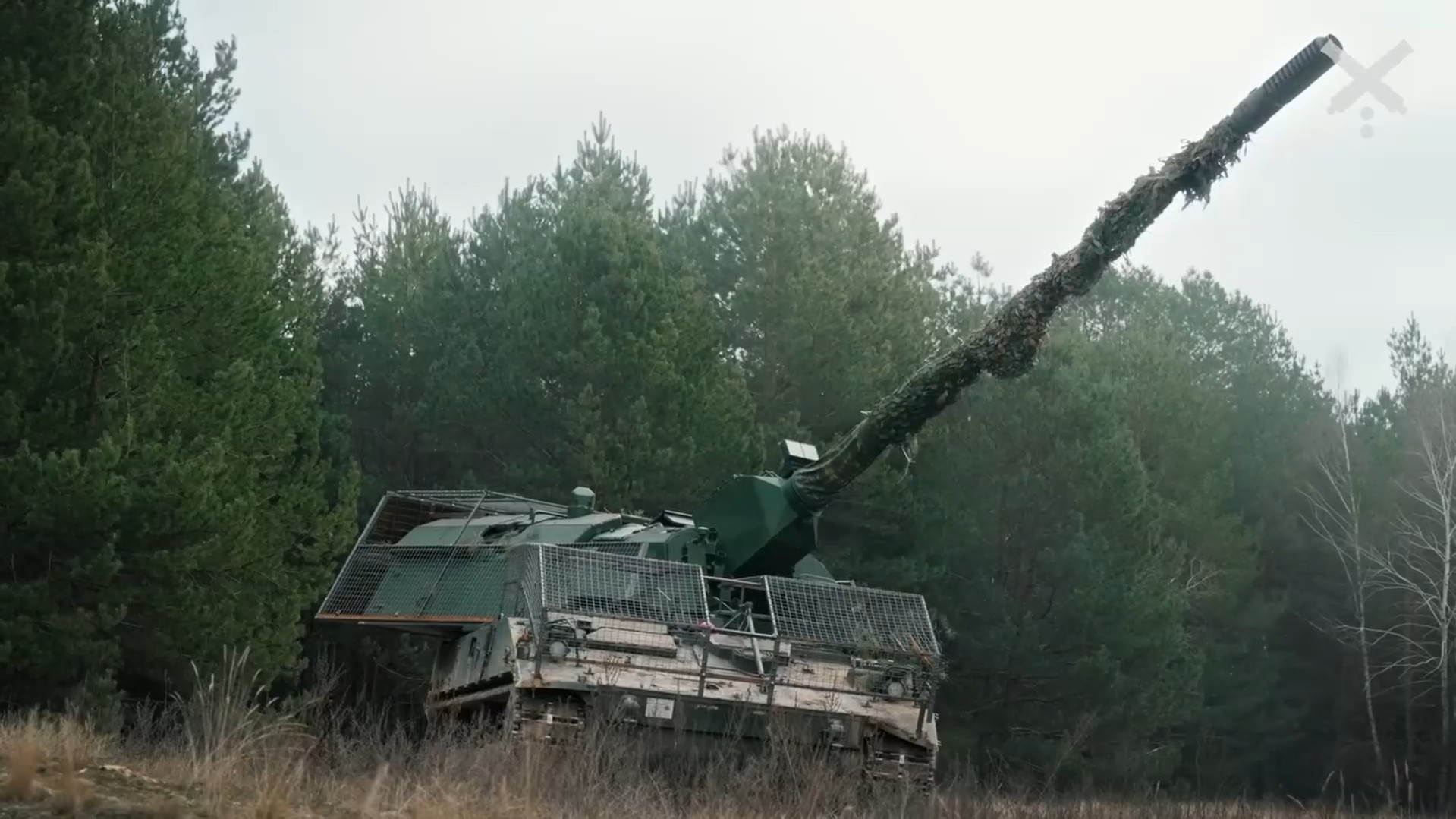
Modern artillery systems such as the PzH 2000 supplied by Germany, the Netherlands and Italy could be moved several kilometres back from their current position along the front line and still cover the same area as before. This would mean significant improvements in safety for both the system and the soldiers.
On the one hand, this would considerably increase the time available to Ukrainian artillery crews to bring their systems back to safety after shelling a target. On the other hand, with increased range, the number of drones and other military assets available to Russia to attack Ukrainian artillery systems would also decrease significantly.
As far as drones are concerned, most Russian FPV drones have a maximum range of around 20 to 25 kilometres. If a Ukrainian PzH 2000 is deployed around 40, 50 or even 60 kilometres behind the front line, these drones are practically incapable of inflicting any damage on the artillery system.
Only significantly fewer available drones, such as the recently deployed fibre optic drones with a range of around 50 kilometres, would continue to pose a threat.
On the other hand, the use of this ammunition naturally also makes it possible to engage targets in the rear area that were previously out of range and therefore had to be engaged with other means, such as the M142 HIMARS MLRS.
Therefore, regular deliveries of extended-range artillery ammunition to various sections of the front line would also potentially increase the number of targets that could be engaged, putting additional pressure on the Russian military.
M982 Excalibur and VULCANO 155?
But what kind of artillery shells could the German government supply to Ukraine in relatively large quantities at relatively short notice?
In fact, the choice is not particularly vast, especially when it comes to shells with significantly extended range. To date, Ukraine has already used large quantities of M982 Excalibur shells and small quantities of VULCANO 155 shells against the Russian army.
However, future deliveries of M982 Excalibur shells with a range of up to approximately 50 kilometres (depending on calibre length) are likely to be ruled out. Already some time ago, the Russian military succeeded in reducing the accuracy of the artillery shell drastically from 55% to only 6% through jamming.
I therefore consider it highly unlikely that the German government would want to invest hundreds of millions in the production of, say, 5,000 of these artillery shells, knowing that they would actually be extremely ineffective when used on the front line and that better alternatives are available.
This brings us to the most likely choice, the VULCANO 155 artillery shell. Between early and mid-2023, the German government delivered 255 of these state-of-the-art artillery shells in various versions to the Ukrainian army.
This enabled the AFU to engage Russian targets at a distance of up to 70 kilometres with metre-level accuracy and, thanks to its multipurpose warhead with insensitive explosives and preformed tungsten fragments, to seriously damage or destroy them without any problems.
But how quickly could the first delivery arrive in Ukraine after the order is placed? This depends on various factors.
An industry source told me that under optimal conditions, the first few hundred artillery shells could be delivered to Ukraine after about three months, with further ammunition deliveries following regularly thereafter.
However, this is conditional on the German government placing a large order. The bigger the order and the greater the financial commitment of the German government to the manufacturer, the more likely it is that deliveries will happen quickly.
VULCANO shells in various calibres are manufactured by the same manufacturer at the same location. If a sufficiently large order were placed, the manufacturer would most likely feel compelled to prioritise the delivery and adjust part of its production for other calibres “at short notice” in order to ensure a faster delivery to Ukraine.
If a potential contract concluded by the German government only concerned the delivery of, say, a few hundred shells, it is quite possible that the delivery would take considerably longer.
In the case of the first delivery to Ukraine in 2023, for example, it took around seven months from the order being placed in August 2022 to the likely delivery of the first of just 255 VULCANO shells in March 2023.
In any case, it can be assumed that production for Ukraine, which would be commissioned shortly, would bear fruit before the end of this year, enabling the Ukrainian army to make use of state-of-the-art artillery ammunition that would be superior in every way to that available to the Russian invaders.
Of course, one could also focus more on supplying so-called “base bleed shells” to give the Ukrainian army another small range advantage.
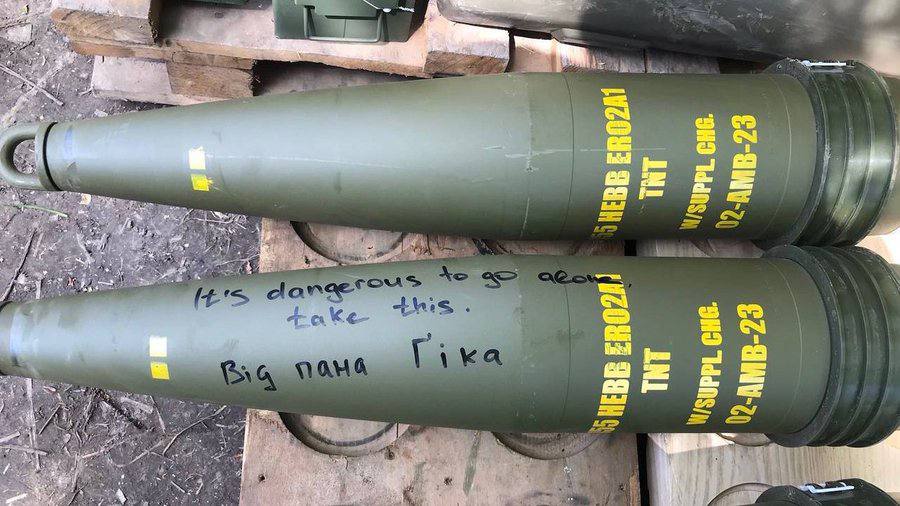
After firing such a shell, a pyrotechnic charge ignites at the base of the artillery shell. The gases produced reduce the negative pressure behind the shell, thereby lowering air drag and ultimately increasing the range by several kilometres.
However, I do not assume that these shells were the primary focus of the discussion between Fedorov and Pistorius.
In addition, there are of course experimental munitions and prototypes such as ramjet artillery shells that could be supplied to Ukraine. Among others, Rheinmetall CEO Armin Papperger announced in mid-2024 that Rheinmetall also wanted to supply prototypes of artillery shells with a range of 100 kilometres to Ukraine in 2024.
Nevertheless, I consider it rather unlikely that Germany would continuously supply such or similar ammunition, especially in large quantities.
I therefore assume that, if the German government complies with the Ukrainian Minister of Defence’s request, Germany will in the future provide Ukraine with an increased supply of a mix of VULCANO 155 and base bleed artillery ammunition.
All the same, this mix is likely to continue to account for only a small proportion of the artillery ammunition supplies financed by Germany in the future.
Czech ammunition initiative
According to the Ukrainian Ministry of Defence, Fedorov also pointed out to Pistorius that it is a high priority for Ukraine that Germany continues to participate in the Czech ammunition initiative.
The initiative was launched by Czechia in early 2024 in response to the enormous shortage of ammunition in Ukraine and has since been responsible for the delivery of around four million rounds of various types of ammunition until the end of 2025.
In 2024, the German government, led by then-Chancellor Olaf Scholz, contributed €576 million to finance the delivery of 180,000 rounds of 155mm ammunition.
As far as is known, no new commitment was made for the following year until April 2025, and due to the changed communication strategy of the German government under the leadership of Friedrich Merz, it is therefore unclear whether the Federal Ministry of Defence participated in the initiative again last year.
However, it should now be clear that Ukraine is firmly counting on Germany, as one of the initiative’s largest contributors, to continue its participation, at least in 2026.
If you liked this post, consider following me on X, Bluesky, or Telegram. If you like, you can also leave me a tip on Ko-fi.





Great Article!